
hairs per square inch
At its thickest, a sea otter's two-layer coat is the densest fur of any animal. Air trapped in it is the otter's only insulation.
True stories and photographs of otters — rafts that sleep on the open sea, stone-tool users of the kelp forest, and river otters that came home when the water ran clean again.
Photo: Charles J. Sharp, CC BY-SA 4.0
About the archive
Otters live on a boundary. Half of their world is water — cold Pacific swell, slow tropical rivers, the brackish channels of an estuary — and half is the shore where they groom, sleep and raise their young. This small archive collects stories from that boundary.
Every field note below is retold in our own words from published research, aquarium and conservation records, or news reporting, and each one links to its original source. The photographs come from photographers who chose to share their work under free licences; they are credited on every image and listed in full on the credits page.
Otter facts
Whales and seals keep warm with fat. Sea otters do it with fur, appetite and a few clever habits.
At its thickest, a sea otter's two-layer coat is the densest fur of any animal. Air trapped in it is the otter's only insulation.
To fuel a furnace-like metabolism, a sea otter eats roughly a quarter of its own weight in crabs, clams, urchins and snails daily.
Loose skin under each forearm works as a pouch for prey collected on a dive — and, often, for a favourite rock.
After the fur trade, a small group of southern sea otters was found off Big Sur in 1938. Today the population is around 3,000.
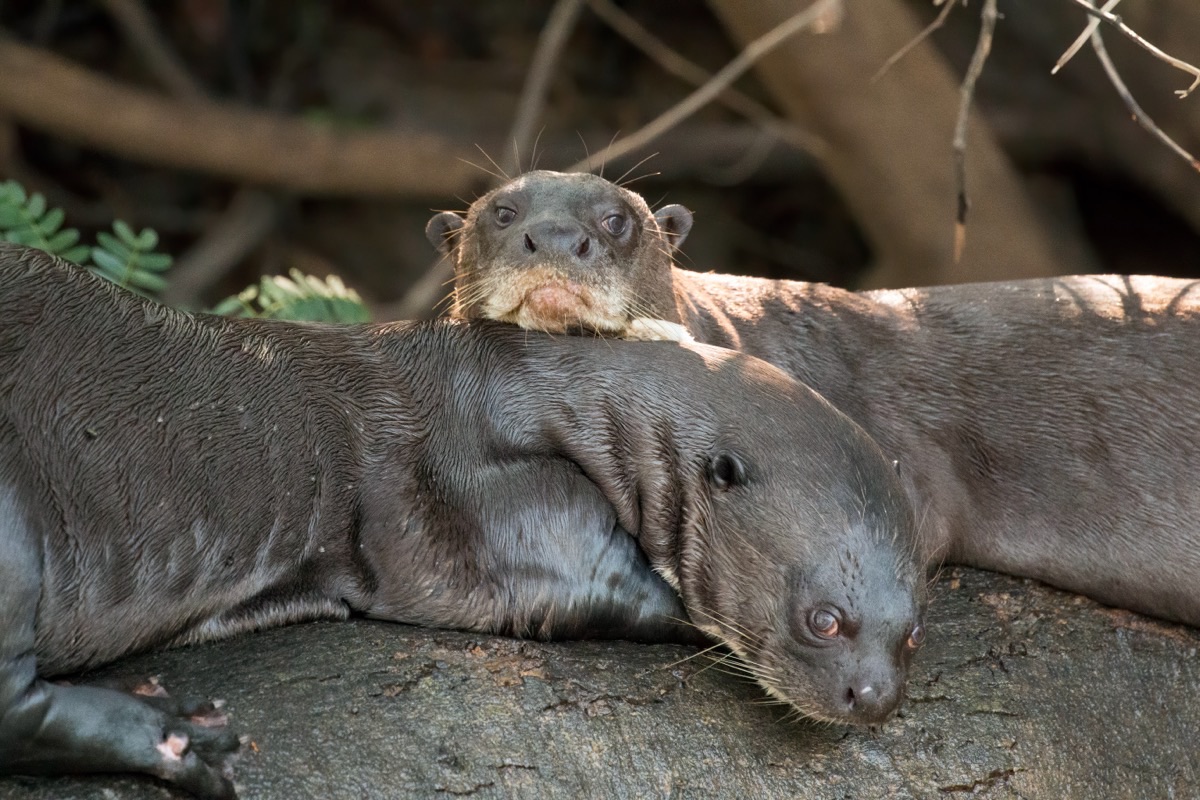
South America's giant otter can reach about six feet in length — the longest otter on Earth and a top predator of its rivers.
From the tiny Asian small-clawed otter to the sea otter, thirteen species live on every continent except Australia and Antarctica.
Sources: Monterey Bay Aquarium, “Sea otter”; Smithsonian Magazine, 2021; IUCN SSC Otter Specialist Group.
Field notes
Retold from the original research and reporting. Each note ends with a link to its source.
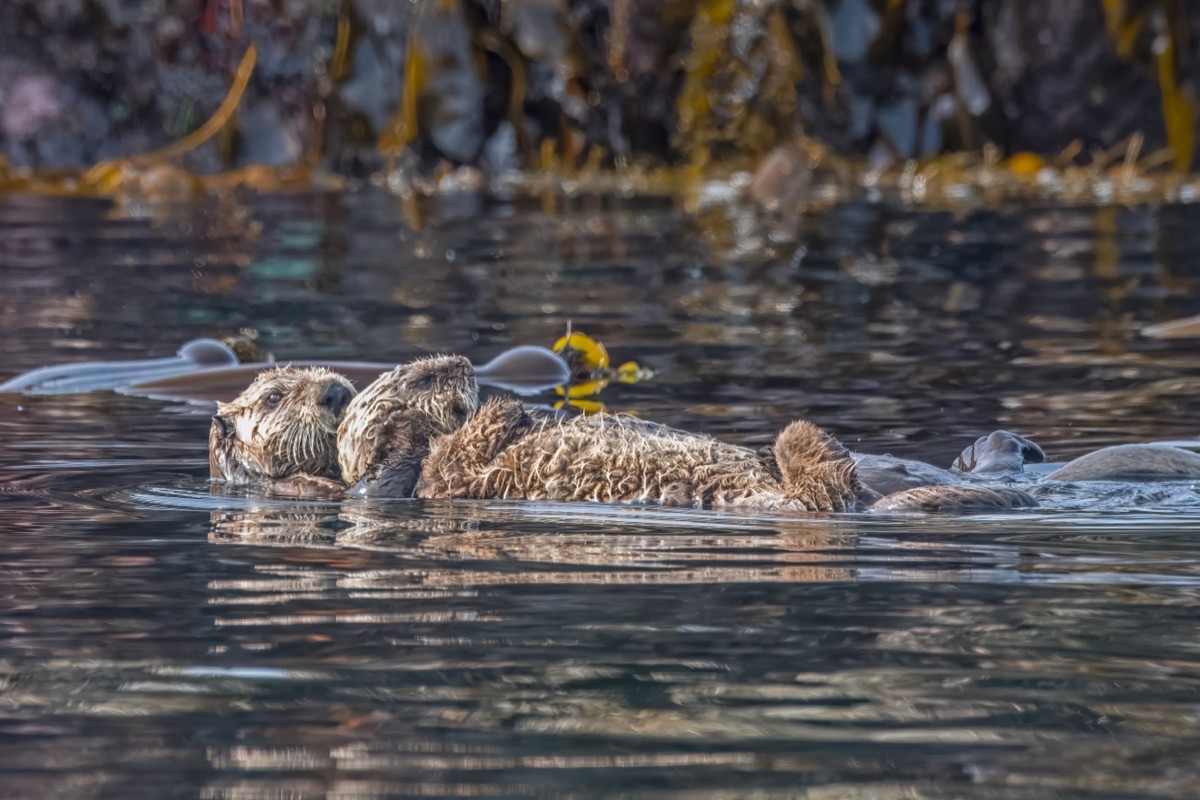
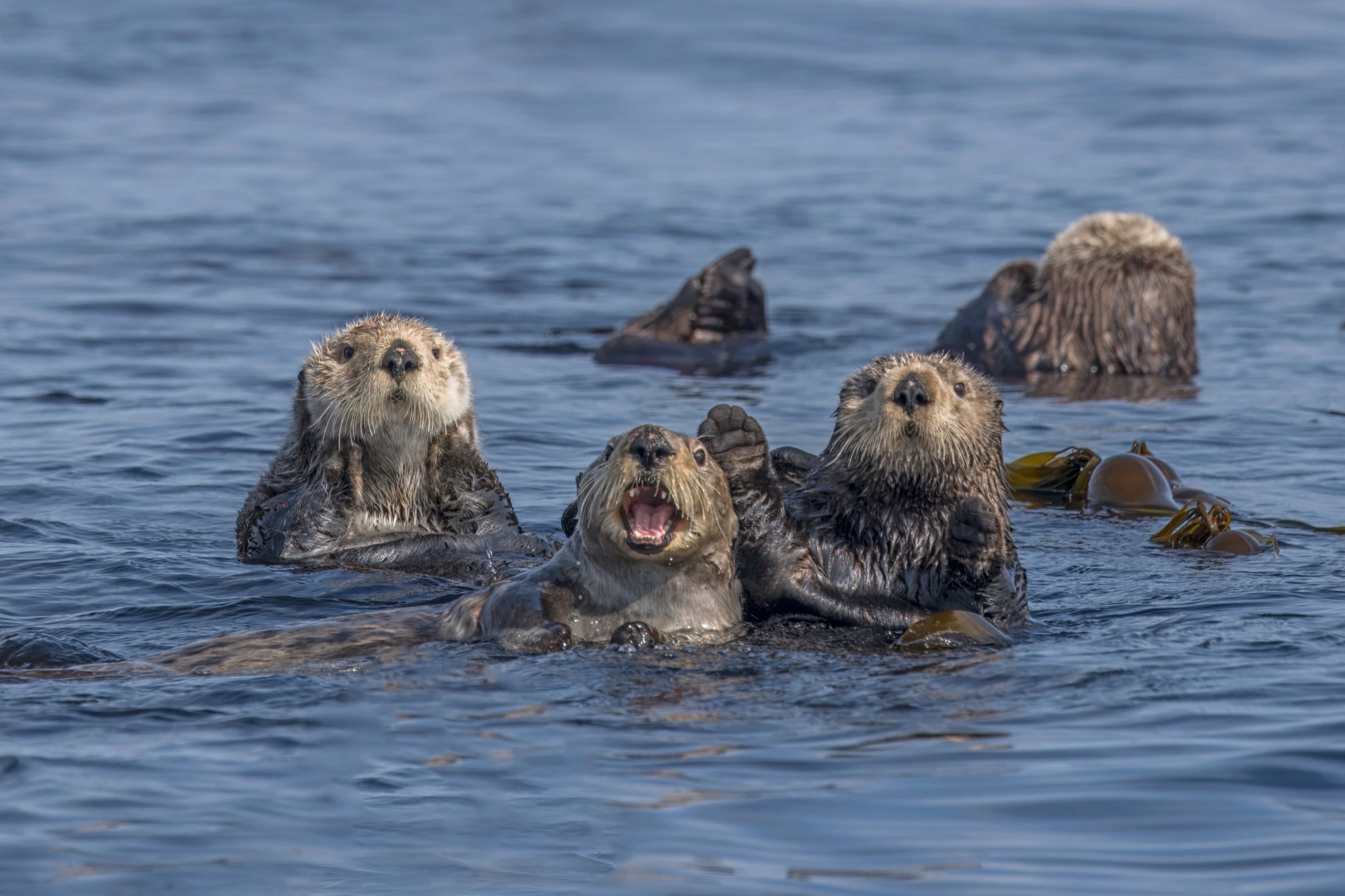
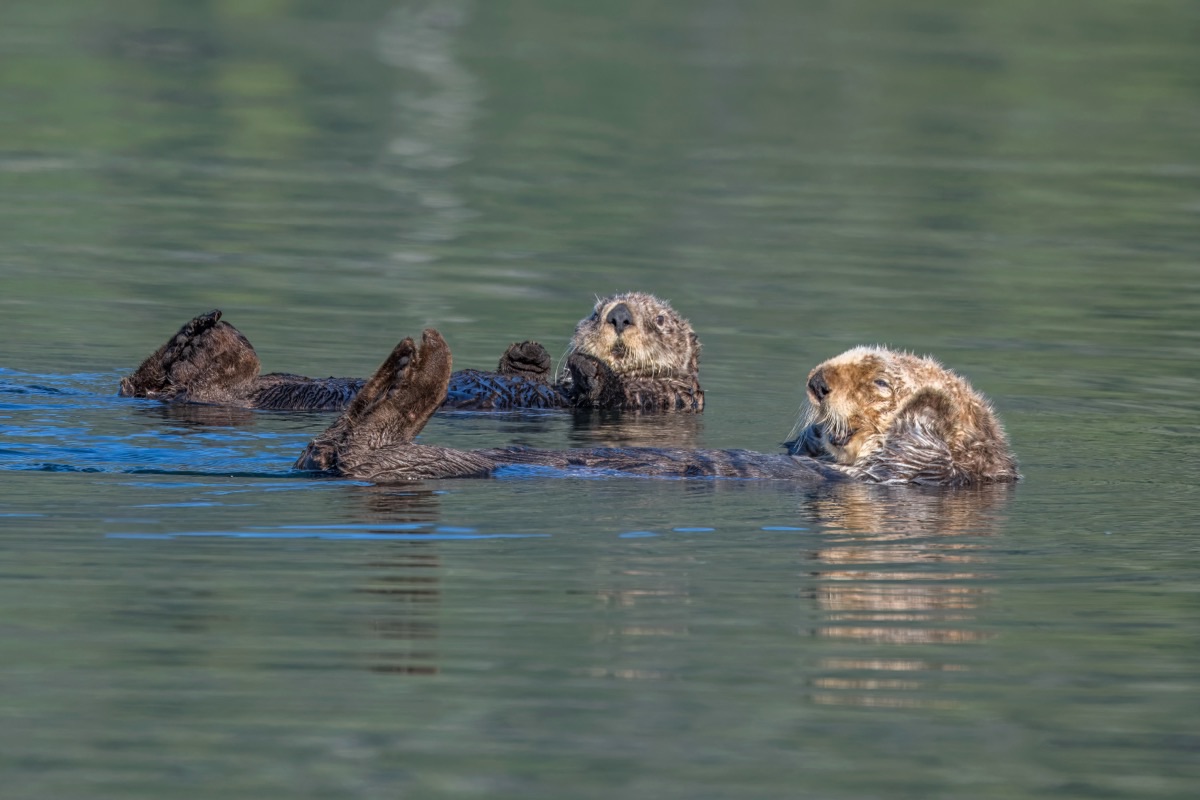
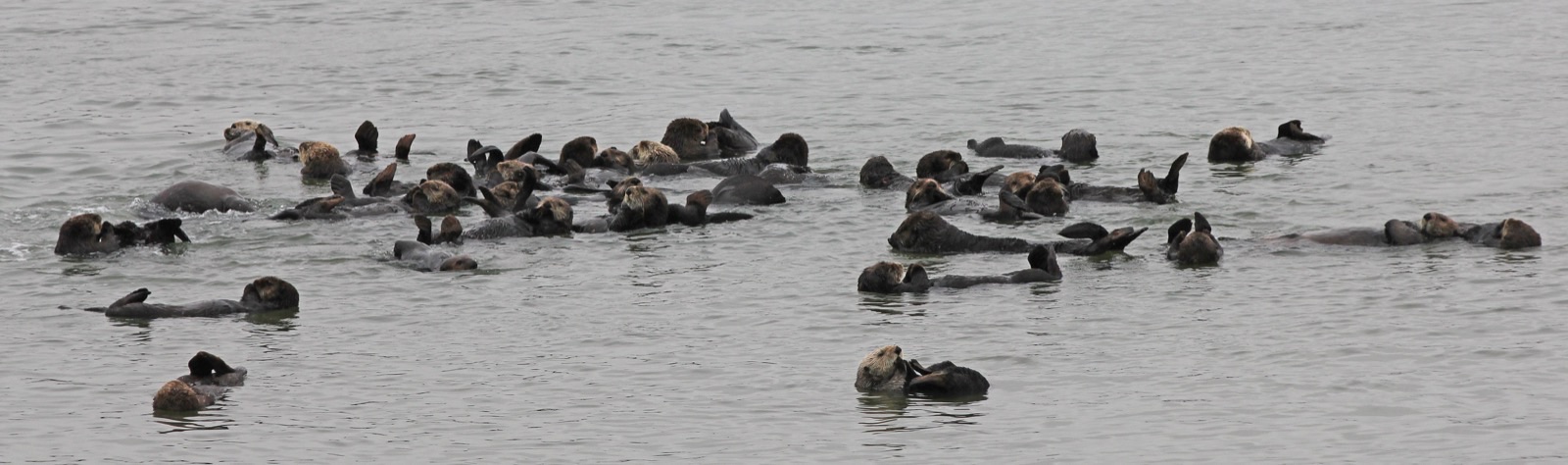
Sea otters sleep on their backs on the open sea, and the ocean keeps moving while they do. Their answer is company. Otters gather in groups called rafts — usually split into males and females — that range from fewer than ten animals to well over a hundred. In early 2023, “super-rafts” of more than 200 otters were reported off Monterey.
To avoid drifting off, a resting otter wraps itself in a strand of kelp or simply stays in light contact with its neighbours. The famous image of two otters holding paws — a 2007 video from the Vancouver Aquarium that travelled around the world — is real, but it is rarely seen in the wild. Kelp, not hand-holding, does most of the anchoring.
Source: Discover Magazine, “Sea Otters Hold Hands While Sleeping…” (2024)
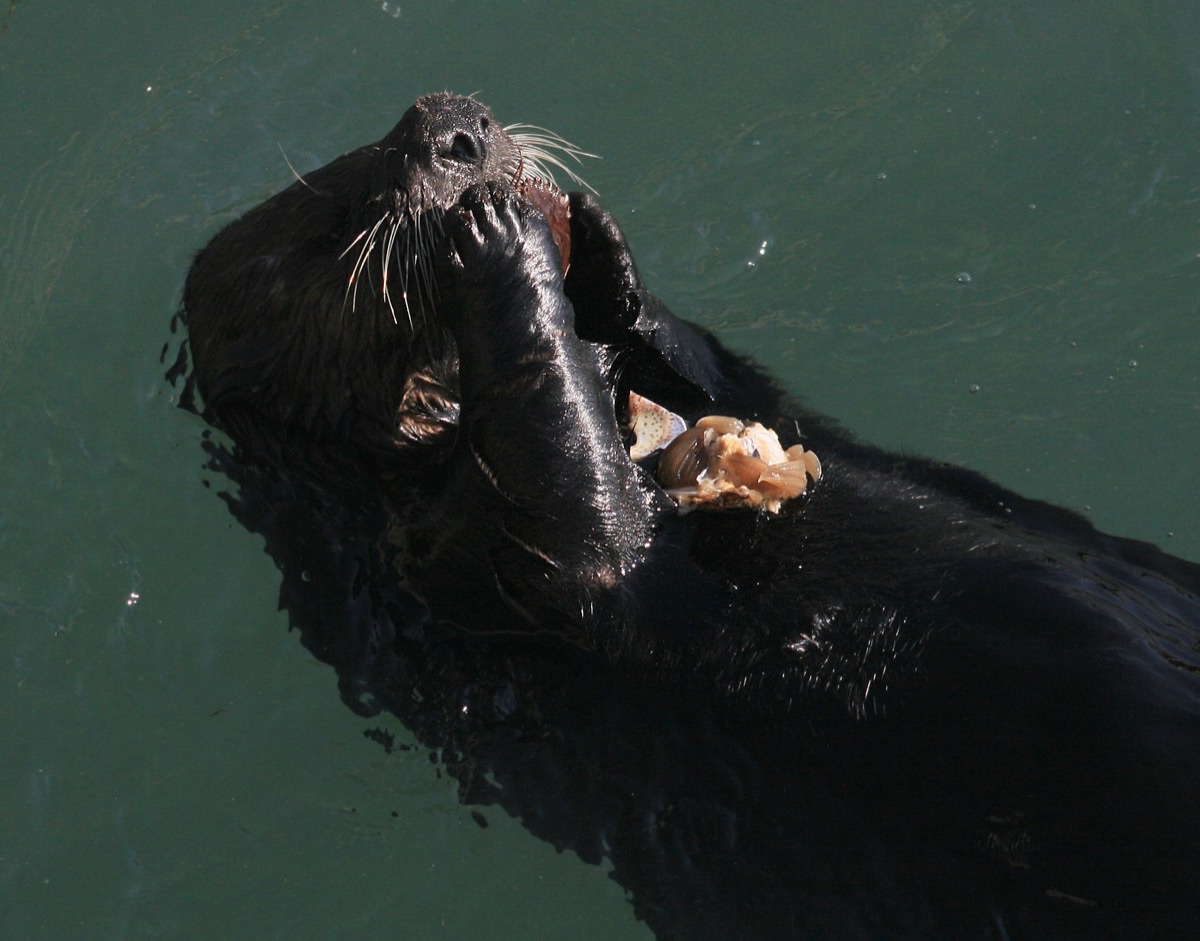
Sea otters are among the few marine mammals that use tools. Floating on its back, an otter will set a rock on its chest and pound a clam or a snail against it until the shell gives way — then tuck the rock back into the loose skin under its forearm for the next dive.
A study published in Science in 2024 followed 196 radio-tagged southern sea otters and found that tools matter most for females. Tool-using females could open prey up to 35% harder than tool-using males could, and the females that used tools most often had the least tooth damage. As favourite foods like abalone and urchins grow scarce, a stone lets a smaller otter live on crabs, mussels and snails without breaking its teeth.
Source: UC Santa Cruz News (May 2024) on Law et al., Science 384, 798–802 (2024)
In the early 1970s, ecologists James Estes and John Palmisano compared islands in the western Aleutians that still had sea otters with islands where the fur trade had wiped them out. The contrast was stark. Where otters hunted, sea urchins were kept in check and kelp grew in thick underwater forests. Where otters were missing, urchins multiplied and grazed the kelp down to bare rock.
Their short 1974 paper in Science became one of the best-known examples of a keystone predator: a single species whose presence reshapes an entire coastal community — and indirectly feeds the fish, birds and invertebrates that depend on the kelp.
Source: Estes & Palmisano, “Sea otters: their role in structuring nearshore communities”, Science 185, 1058–1060 (1974)
Since 2001, the Monterey Bay Aquarium has paired stranded, orphaned sea otter pups with non-releasable females living at the aquarium. The adult — the first was an otter named Toola — raises the pup as her own and teaches it to dive, forage and groom, while the pup learns as little as possible about people.
Between 2002 and 2016, 37 of these surrogate-reared pups were released into Elkhorn Slough, an estuary that held only about twenty otters, mostly males, when the releases began. A study in Oryx found that they survived and bred like wild otters, and that they and their descendants accounted for more than half of the slough's population growth.
The otters changed the estuary too. Earlier work in the slough showed that otters eat so many crabs that small grazers — sea slugs and tiny crustaceans — survive to clean algae off the eelgrass. The seagrass meadows recovered even as farm runoff kept pouring nutrients into the water.
Sources: Mayer et al., Oryx (2019); Monterey Bay Aquarium, history of the Sea Otter Program; Hughes et al., PNAS (2013), via ScienceDaily
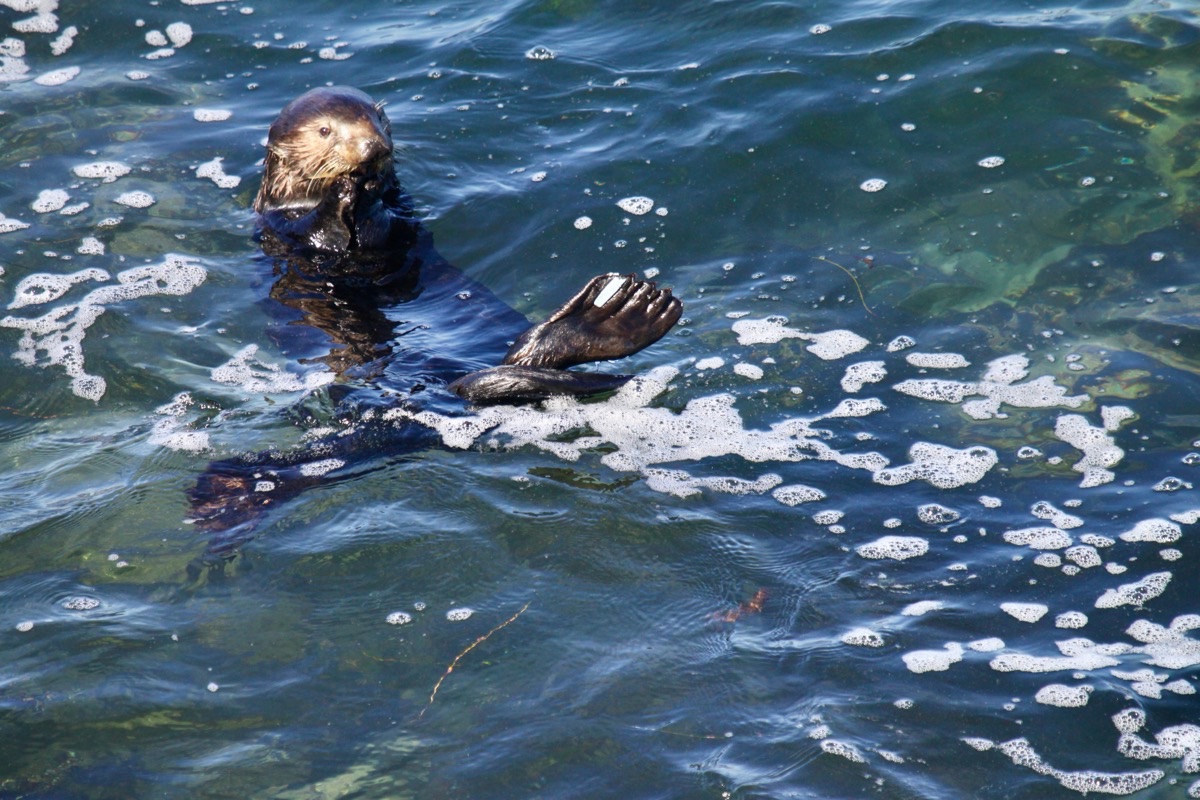
In the summer of 2023, a female southern sea otter known by her tag number, 841, became the most famous animal on the California coast. Off Santa Cruz she swam up to surfers, climbed onto their boards, chewed on them and refused to give them back.
Wildlife officials called the behaviour highly unusual and a risk to public safety, and suggested it might be linked to hormonal surges or to otters being fed by people. In July a team from California's Department of Fish and Wildlife and the Monterey Bay Aquarium tried to catch her — with a surfboard as bait — but she slipped away every time.
That October a local photographer spotted her with a newborn pup, and the capture effort was called off. The hormonal changes of pregnancy had been one of the explanations officials suggested all along.
Sources: FOX, “Surfboard-stealing otter not taking the ‘bait’” (July 2023); NBC, Otter 841 gives birth to a pup (October 2023)
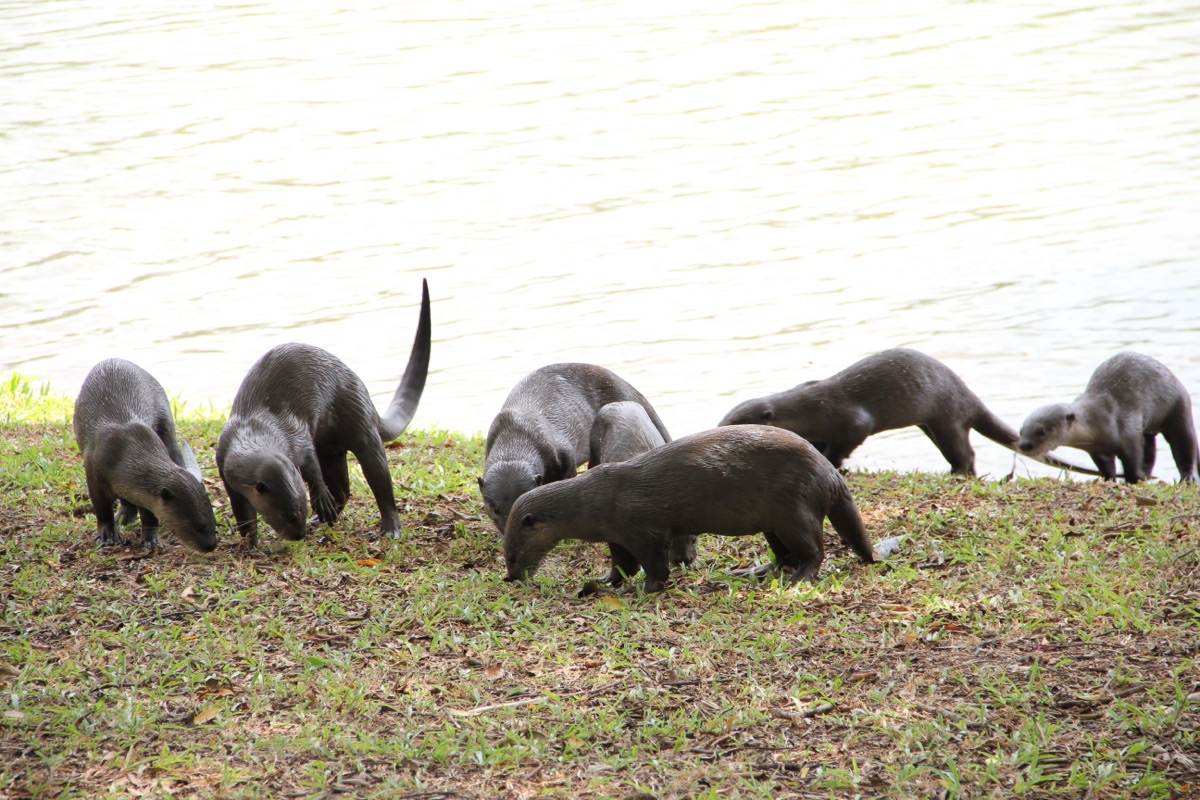
By the late 1960s, Singapore's rivers were so polluted that they could barely support any life. After a long clean-up of the city's waterways, smooth-coated otters began to return from neighbouring Malaysia; by 1998 a pair had settled in the Sungei Buloh wetlands.
In 2014 a family of five appeared in Bishan–Ang Mo Kio Park, where a concrete canal on the Kallang River had recently been replaced with a natural, winding riverbed. They soon had five pups, became known as the “Bishan Ten”, and in 2016 readers of The Straits Times chose them to represent Singapore on its 51st birthday. With help from volunteers who log their sightings, researchers counted around seventy otters across the island by 2018.
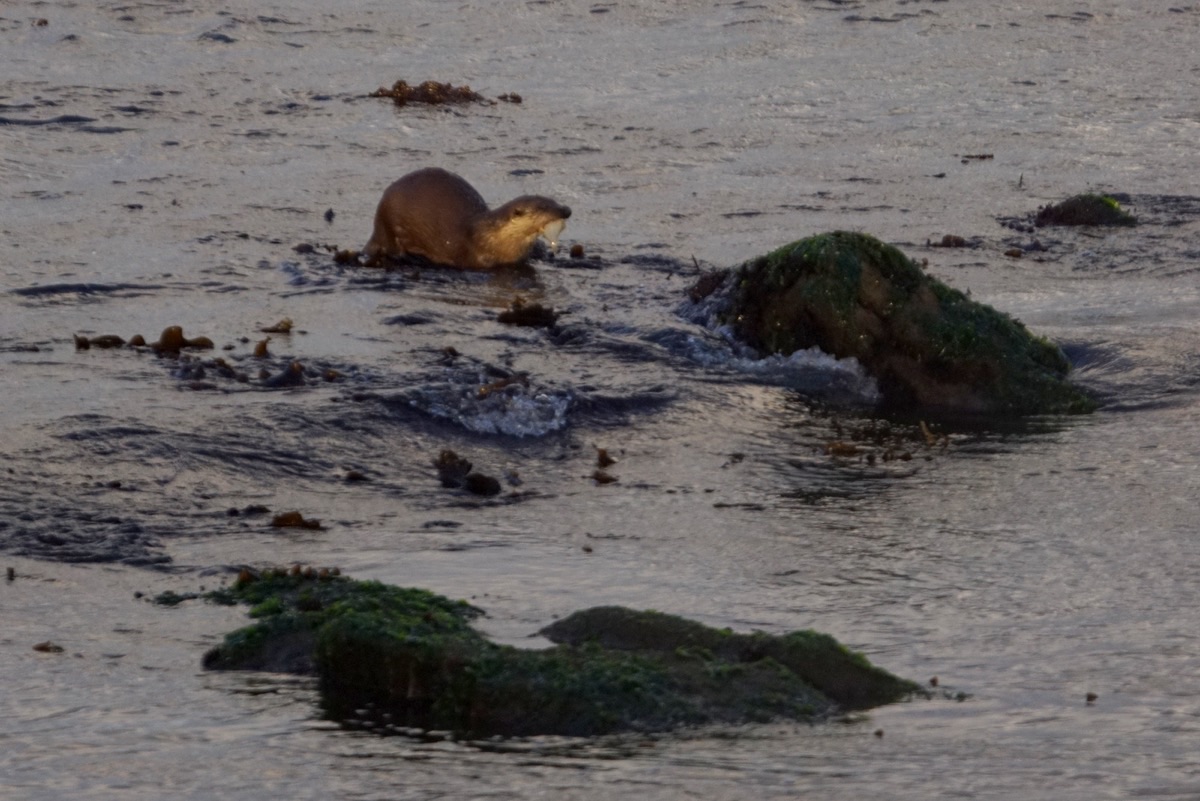
From the mid-1950s, otters vanished from river after river in England. Organochlorine pesticides washing off farmland poisoned them and the fish they ate; by the late 1970s they survived at only a small fraction of their old sites.
Banning the chemicals, cleaning up rivers and giving otters legal protection slowly turned things around. A national survey in 2009–2010 found signs of otters at ten times as many places as thirty years earlier — in every English county except Kent. In August 2011 the Environment Agency confirmed that at least two otters had made holts on the Medway and Eden rivers in Kent, calling it the final piece in the jigsaw of the otter's recovery.
Sources: Yale Environment 360 (August 2011); Channel 4 News (October 2010)
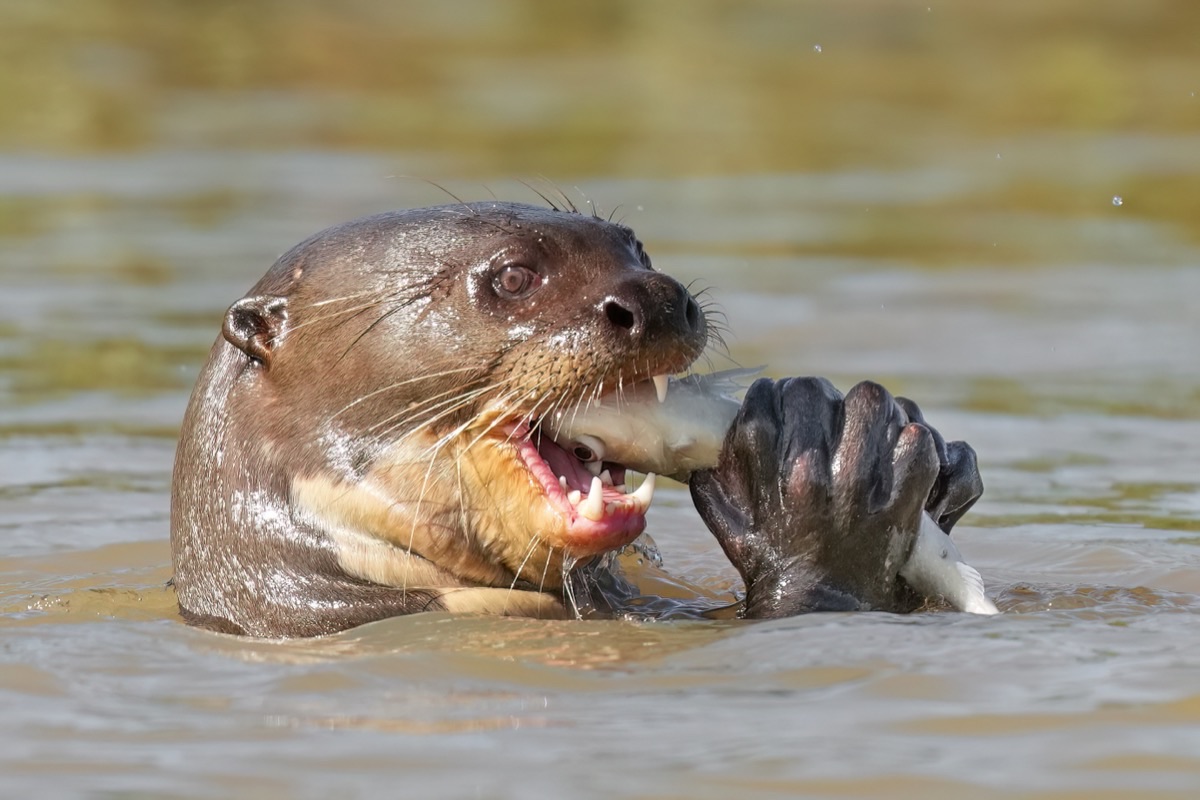
Giant otters — the longest otters in the world, living in noisy family groups in South American rivers — had been considered extinct in Argentina since the 1980s, when the last known animals were seen in Misiones province.
In May 2021, Sebastián Di Martino of Fundación Rewilding Argentina was kayaking on the Bermejo River in El Impenetrable National Park when he heard a splash and managed to film a single wild giant otter swimming and diving. No one knows for certain where it came from: the nearest known populations live in the Paraguayan Pantanal, hundreds of kilometres away — or a small group may have survived unnoticed.
Sources: Mongabay (May 2021); Smithsonian Magazine (June 2021)
Where otters hunted, the kelp grew in forests. Where they were missing, the sea floor turned to bare rock.
Paraphrasing Estes & Palmisano, 1974
Photo: Charles J. Sharp, CC BY-SA 4.0The family
Otters belong to the weasel family. Two live in the sea; the rest are creatures of rivers, lakes, mangroves and marshes.
The Congo clawless otter is sometimes treated as a subspecies of the African clawless otter; the IUCN Otter Specialist Group works with all thirteen. Ranges are simplified.
Gallery
Select a photograph to see it larger. Use the arrow keys to move between images and Escape to close.
Raft, TofinoMother and pupGiant otter, Pantanal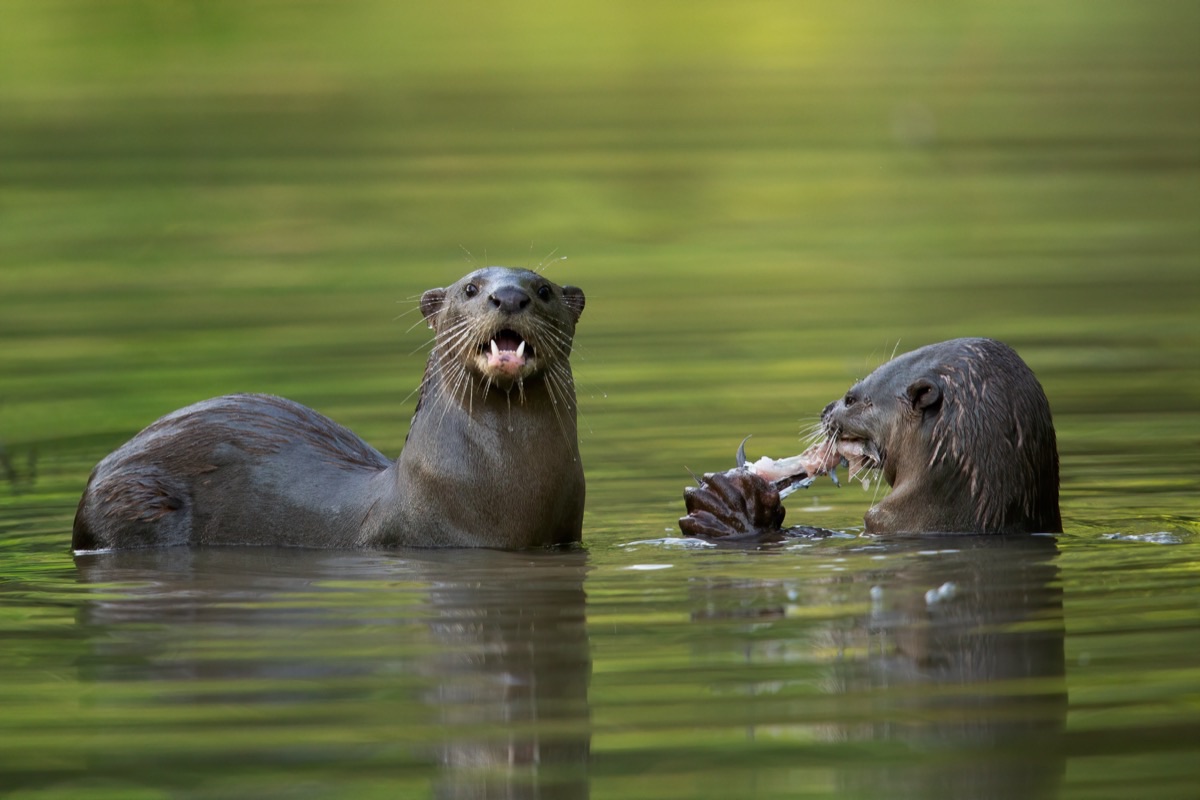 Smooth-coated otters, Singapore
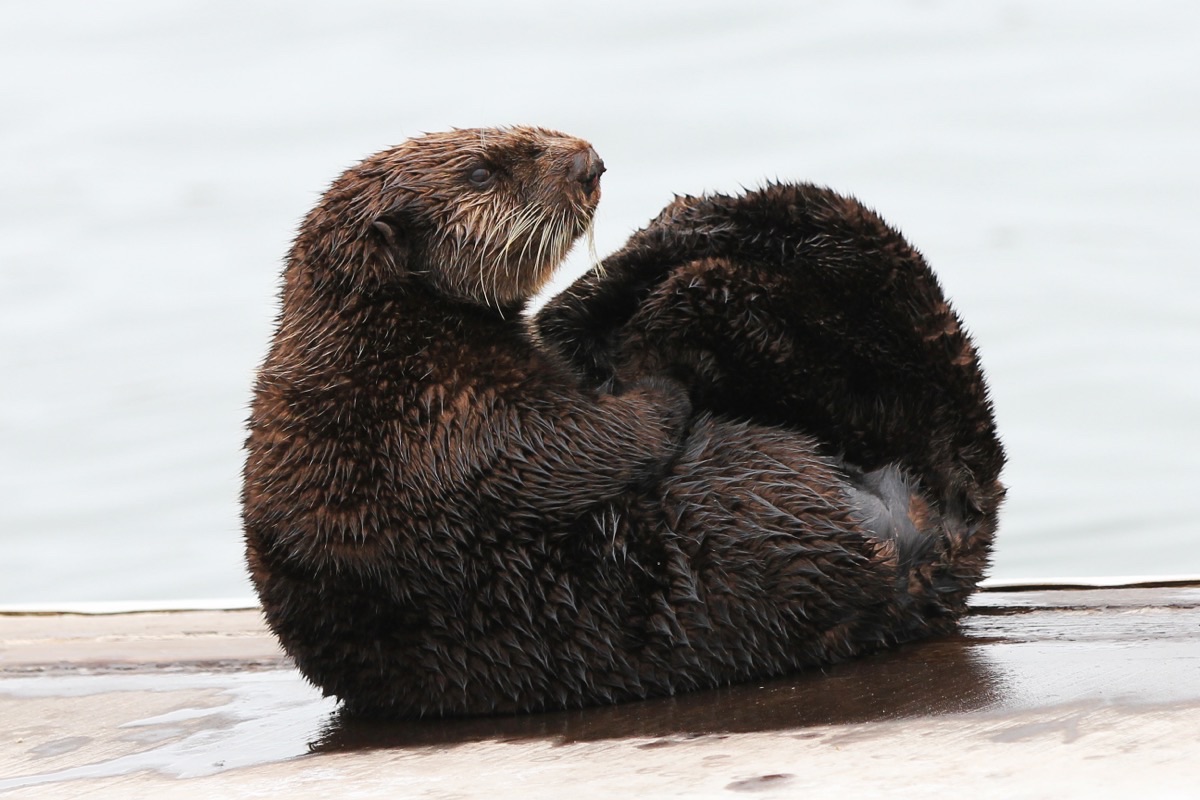 Grooming, Elkhorn SloughRaft, Elkhorn Slough
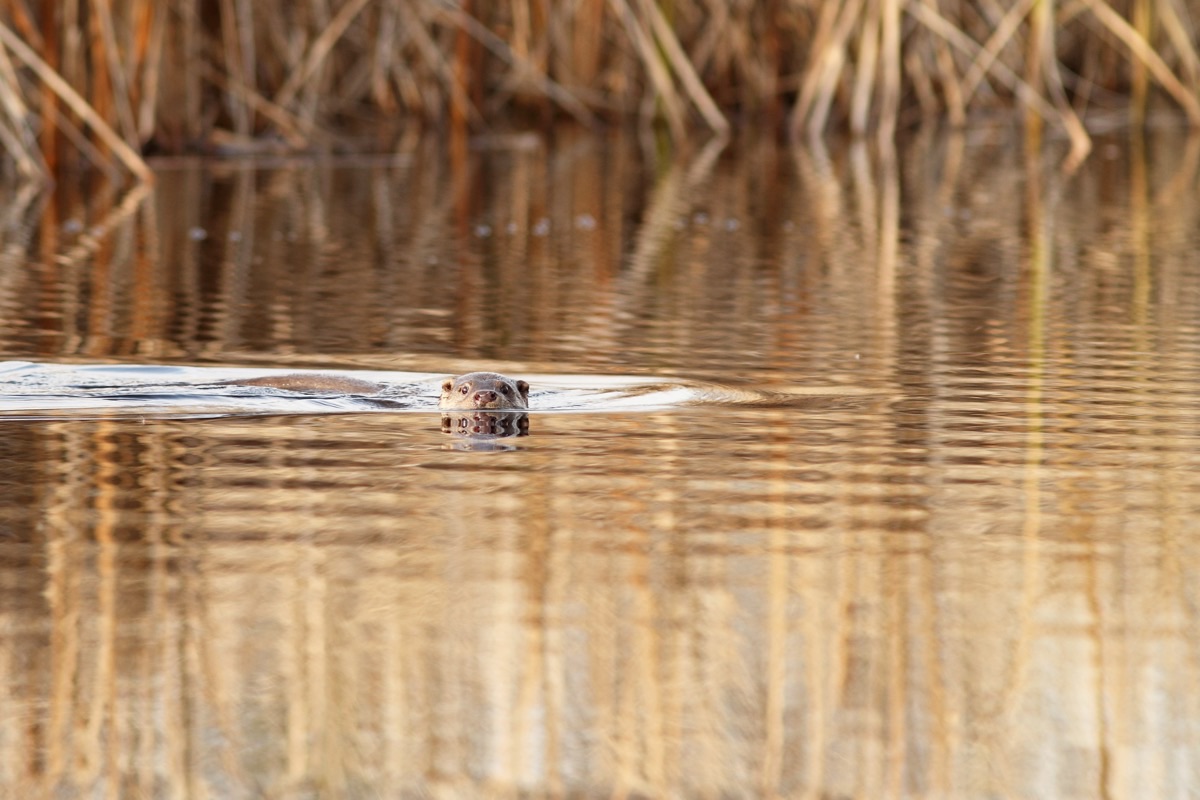 Eurasian otter, HungaryCrab for lunch
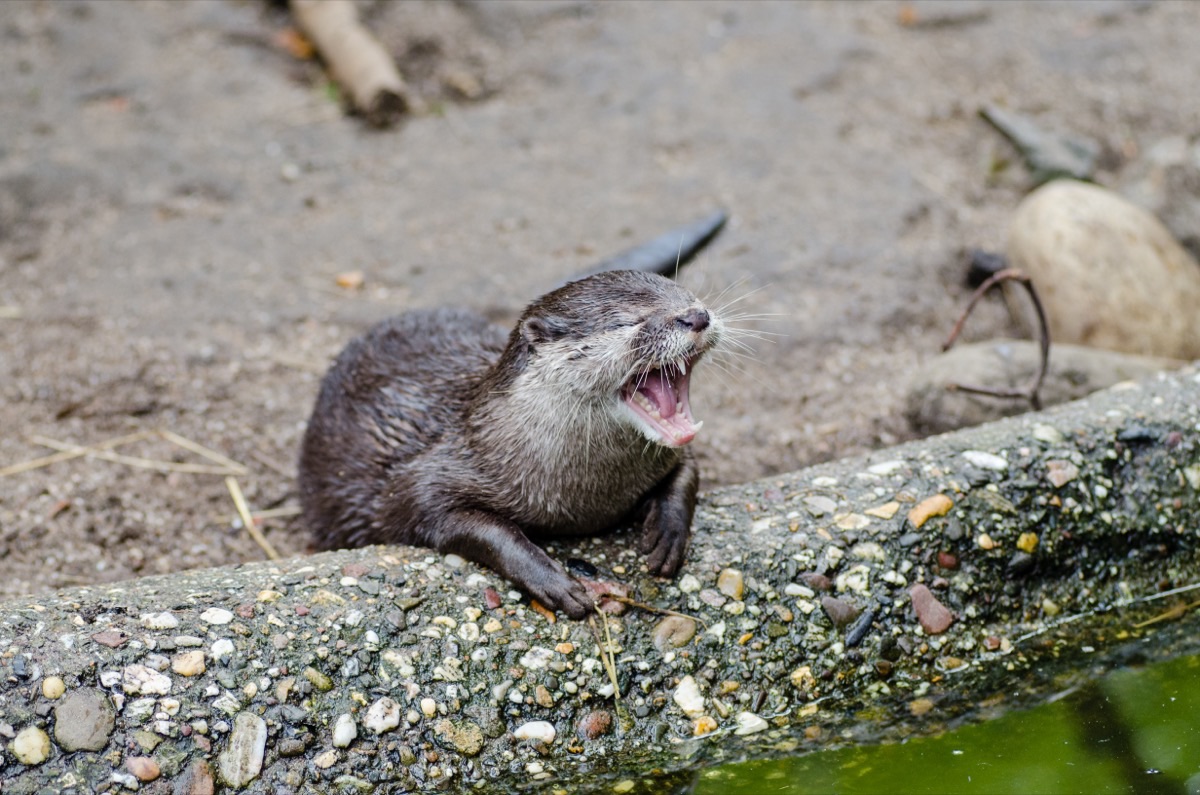 Asian small-clawed otterGiant otters at restOtter 841, Santa CruzAfloatFamily outing, SingaporeEurasian otter, Shetland
All photographs are used under free licences (Creative Commons or public domain) and have been resized for the web. Full attribution is on the credits page.